


Using AI in Corporate Communication: Enhance the Image, Preserve the Reality
How Business Motion uses AI in corporate communication: to enhance visuals and speed up production, never to change the facts decision-makers rely on.
Decision-makers judge a company by what we show them. That is why credibility comes before everything else.
At Business Motion, we use AI to expand what is possible in corporate communication. We use it openly: in writing, in research, in production. But when communication is built around real projects, real companies and real capabilities, there is a boundary we do not cross: we cannot use technology to create a reality that did not exist.
This matters particularly in complex industries. Our communication instruments are often used to present projects, demonstrate expertise, support business development or communicate information to decision-makers. The audience needs to be able to trust what it sees.
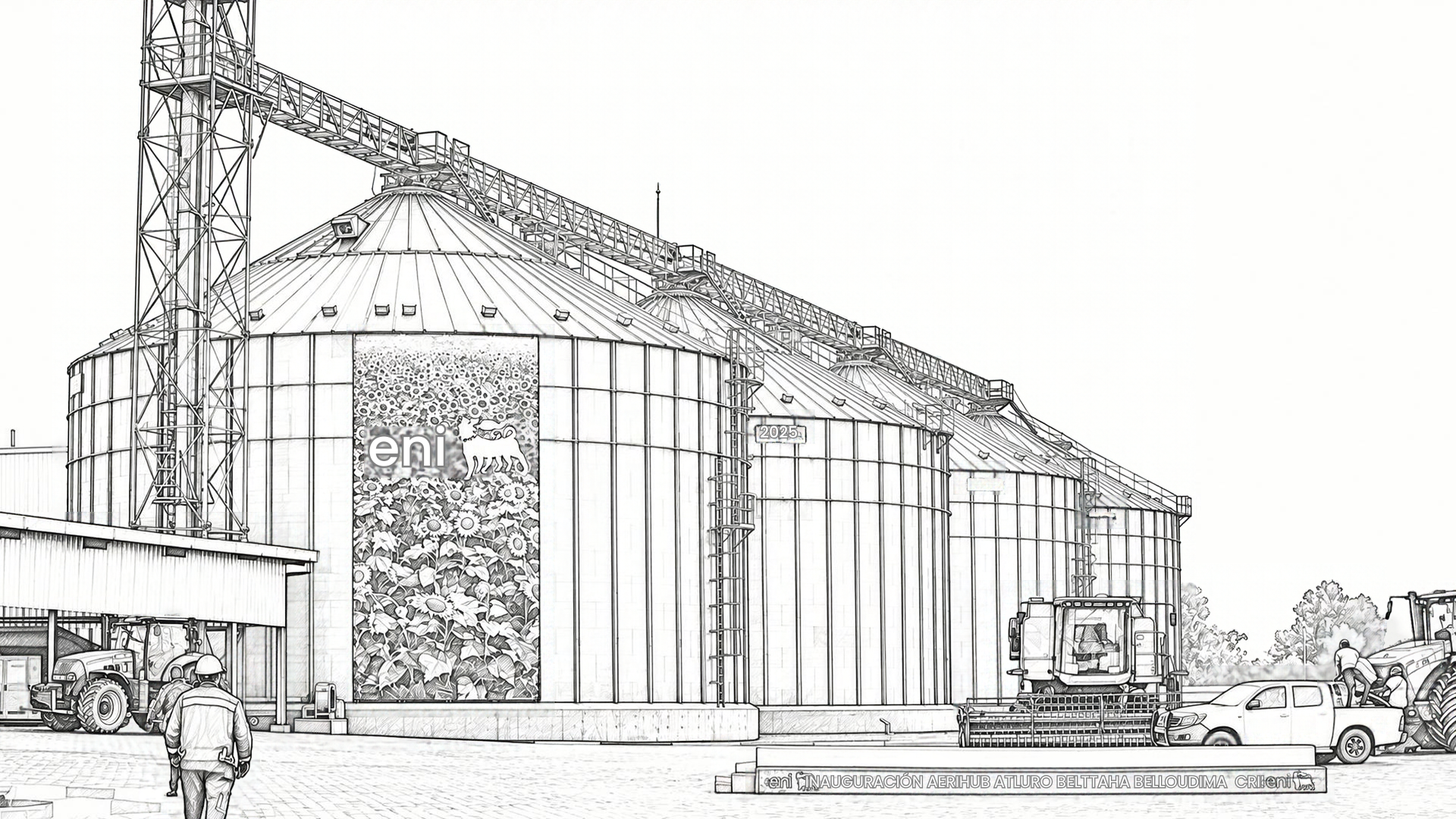
Enhancing a Visual is Not the Same as Changing Reality
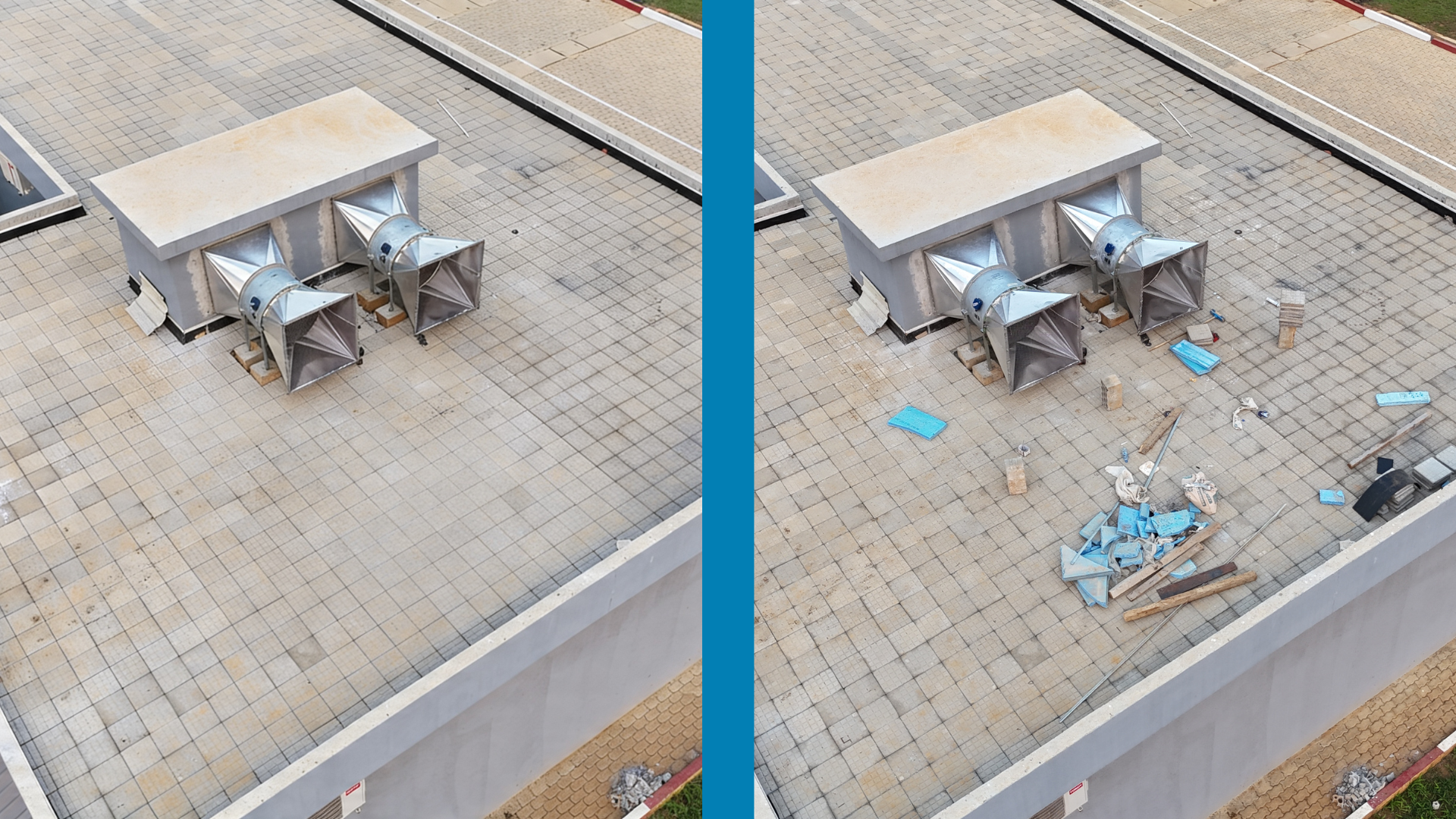
Industrial and construction sites are rarely perfect environments. Equipment, materials, vehicles and other elements can distract from what the viewer needs to understand. Digital and AI-assisted editing can help reduce that visual clutter and make the subject easier to see. But the result must remain faithful to the actual environment.
When presenting a project, we would not transform the site into an unrealistically immaculate environment simply because it looks better. Our objective is not to suggest that the site was perfect. It is to communicate what matters about the project.
The image below shows the same scene: on the left, after AI was used to reduce the visual clutter; on the right, the site as it was filmed. The site, the work and the equipment that matters are unchanged.
There are also occasions when a still photograph can be given a few seconds of movement to create a more dynamic visual sequence. In one example from the AgriHub project in Loudima, a worker in a photograph was not moving. We used AI to turn the photo into a 3-second sequence. He was there, doing that work. Only the movement was added.
This makes a communication instrument more engaging without implying that an event took place when it did not.
We can enhance the way reality is communicated. We cannot change the reality being communicated.
Both examples come from our work on two Zerock projects:
- AgriHub, Loudima — 24-month turnkey EPIC project in the Republic of the Congo
- Agbaya Well 01 Restoration — Shell (SPDC) project in Nigeria's Niger Delta
Voice-Over is Another Example
AI has also changed what is possible with voice-over production. Voice-over may appear to be a relatively simple component of a video, but the performance can significantly affect how an audience receives the message.
For years, even when sourcing voice-over talent online, we would explain how the script needed to be performed: where to create emphasis, where to slow down, what feeling the narration should convey, and how authoritative or conversational it needed to sound. The voice itself was only part of the result.
In 2026, we needed to update a tendering instrument within one week. Our usual voice-over process was not practical within that timeframe, so we used an AI-generated voice. The result was very good. But it still required careful direction and several iterations to achieve the tone and delivery we needed.
The technology saved time. It did not remove the need for judgement.
Credibility is What We Deliver
Our instruments are used as proof of capability. That is why everything we deliver mirrors our clients: their projects, their sites, their capabilities, as they are. If an instrument looks impressive but cannot be trusted, it has failed, however good it looks.
Credibility is not a limit on our work. It is the work.
The Question is Not What AI Can Create
AI will continue to become more capable. It can generate increasingly convincing images, videos, voices and other media. That makes judgement even more important.
When developing communication for complex industries, we need to ask more than whether something looks convincing.
Is it accurate?
Does it represent what actually happened?
Could the audience interpret it as real when it is not?
And ultimately: does it preserve the credibility of the communication?
These are not limitations imposed on creativity. They are part of the responsibility that comes with communicating information that people may use to evaluate a company, a project or its capabilities. AI can make a visual more effective. It can make a production process faster. It can even provide a voice when time is limited. But responsibility for what the audience is being shown remains with us.
Technology can change the way we communicate reality. It cannot change the reality itself.
Business Motion. Communication for complex industries. Since 2014.