


The honest answer to "how much will it cost" is always the same: it depends on what the instrument has to do.
The Stages Behind the Price Tag
Before the number, there is the process: discovery, where the objective and audience get identified; pre-production, where the message gets drafted into a script or storyboard; production, filming or animation; post-production, editing, sound, motion graphics; and delivery. Understanding what happens at each stage explains most of what ends up on the invoice.
The Same Logic Applies Beyond Video
A pitch deck, a campaign, an animated explainer, a mixed-media presentation built for a board — each is priced by the same process: discovery, drafting, production, delivery. A deck's cost depends on how much original design and content development it requires. A campaign's cost depends on how many instruments it spans and how tightly they need to work together. An animation follows the same complexity-over-length principle as video does. Video simply happens to be the instrument people ask about most, but the underlying cost logic is the same for anything a communication firm builds.
Whether the instrument is a video, a deck, or a campaign, the same four stages shape what it costs.
Style, Length, and the People Involved
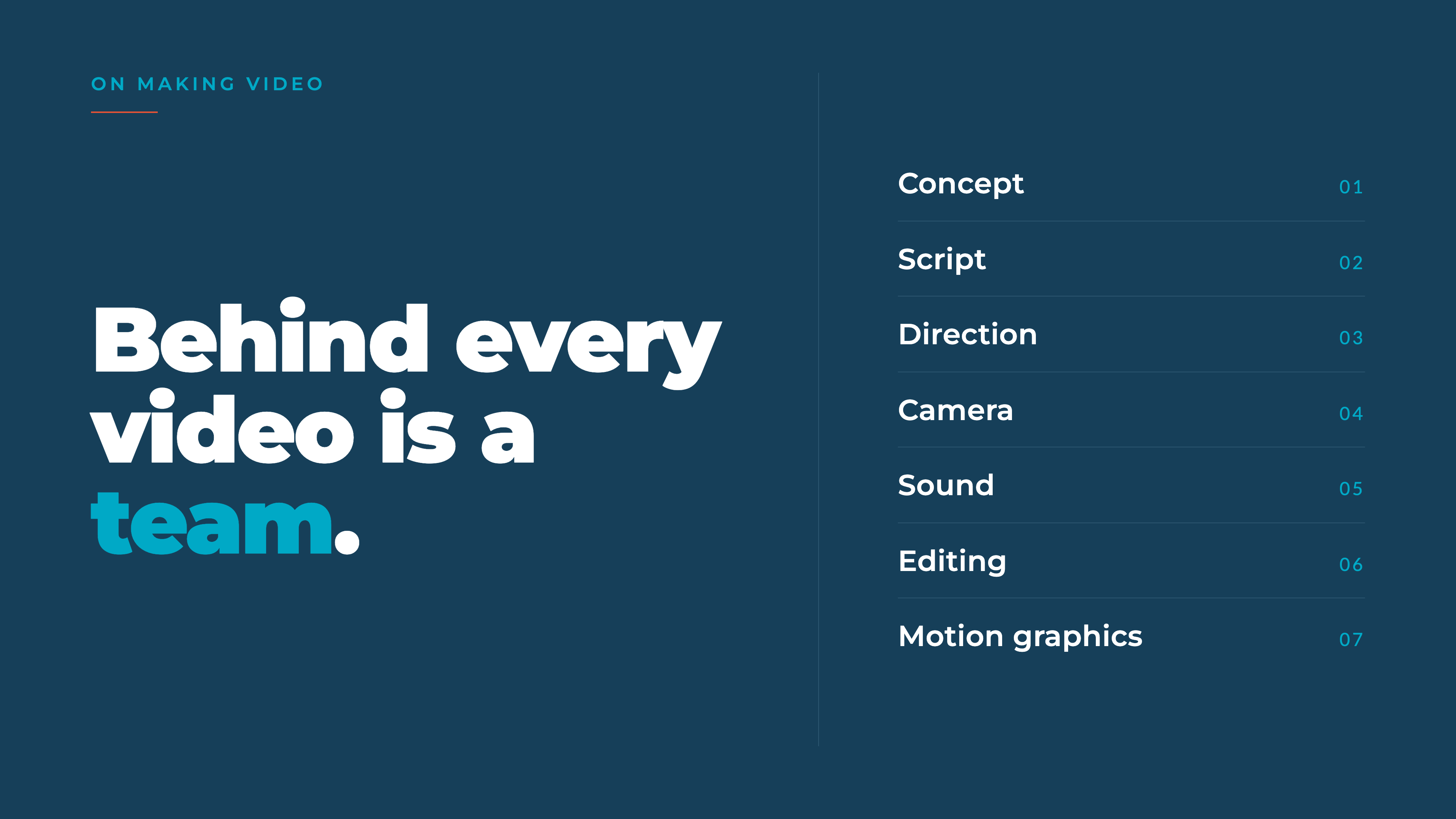
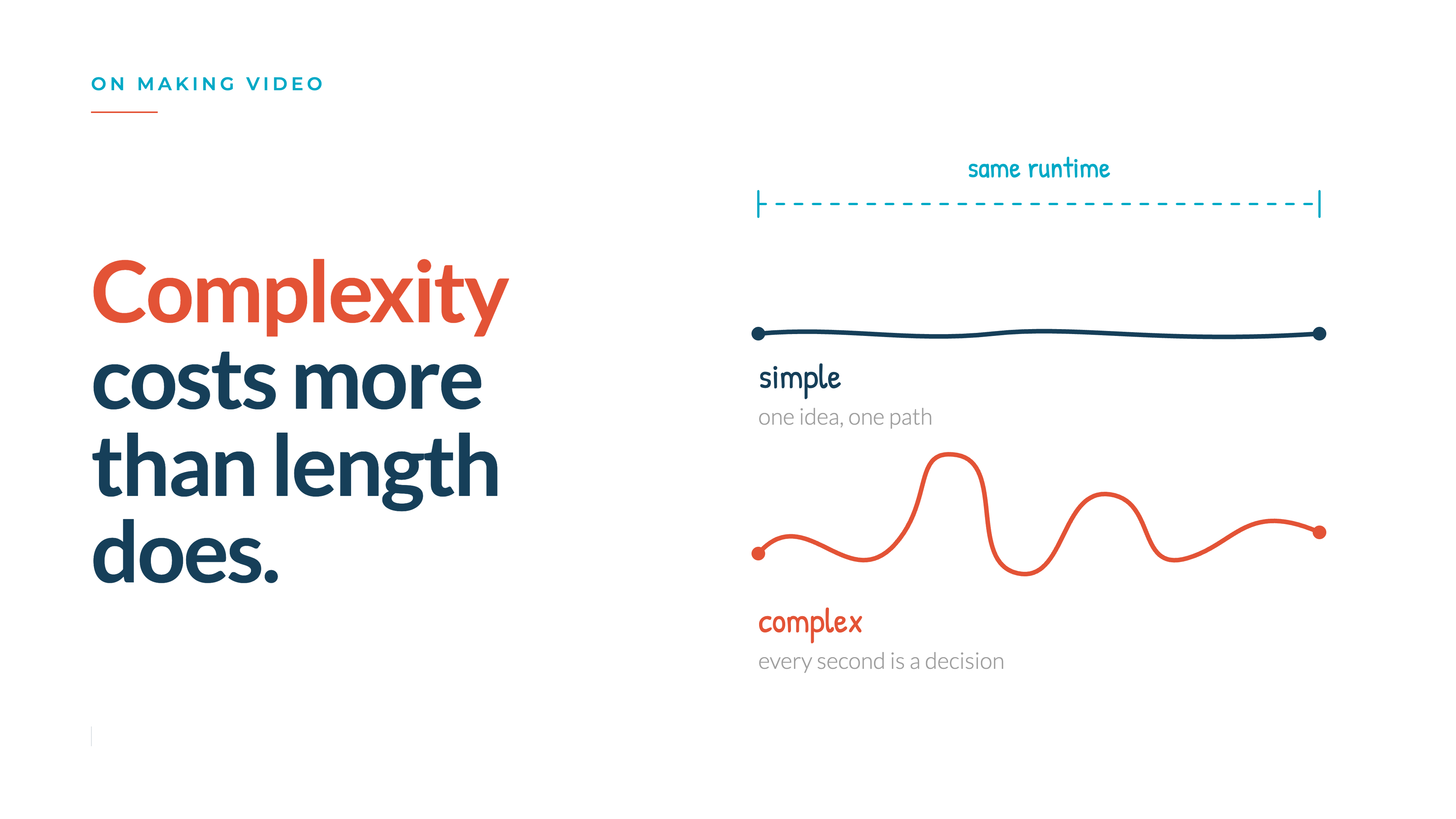
Whether a video is filmed or animated changes the cost, and so does how much of each. A simple animated sequence costs less than one built around detailed character work. A short, high-production commercial can cost more than a longer, simpler interview, because length and complexity do not move together. And behind every video is a team, concept, script, direction, camera, sound, editing, motion graphics, whose size and experience shows up in the result.
A longer video is not automatically the more expensive one. Complexity costs more than length does.
What Already Exists, and What Has to Be Built
Some projects start with usable footage, brand assets, or a script draft already in hand. Others start from nothing. The gap between the two changes the scope considerably, which is why an honest quote depends on an honest look at what already exists before assuming what needs to be created.
Deadlines Are a Cost Factor, Not a Formality
A realistic timeline lets a team do the work properly, in sequence. A compressed one means paying for overtime and a smaller margin for revisions. When time is the one constraint that cannot move, it changes the shape of everything else that can.
None of this is complicated once it is visible, which is exactly the point: a communication firm should be able to explain what is driving a cost, not just quote one. Reach out and we will walk you through it.