


AgriHub: The Project Was Completed. The Story Became a Business Development Asset.
How Business Motion built a communication instrument around Zerock's 24-month EPIC project in the Republic of the Congo for use in business development.
How Business Motion built a communication instrument around Zerock 24-month EPIC project in the Republic of the Congo for use in business development.
For Zerock, the AgriHub project in Loudima, Republic of the Congo, was a 24-month turnkey EPIC project for ENI Congo. AgriHub is a facility that processes seeds into biofuel as part of ENI Congo's sustainability initiatives.
The scale of the project tells only part of the story. AgriHub includes a processing capacity of 90,000 tonnes of seeds per year, 24,000 m³ of storage across four silos, 2.5 MW of power generation, a 6 km medium-voltage line and a 1 km access road. More than 1.5 million work hours went into its delivery, with zero accidents and zero incidents.
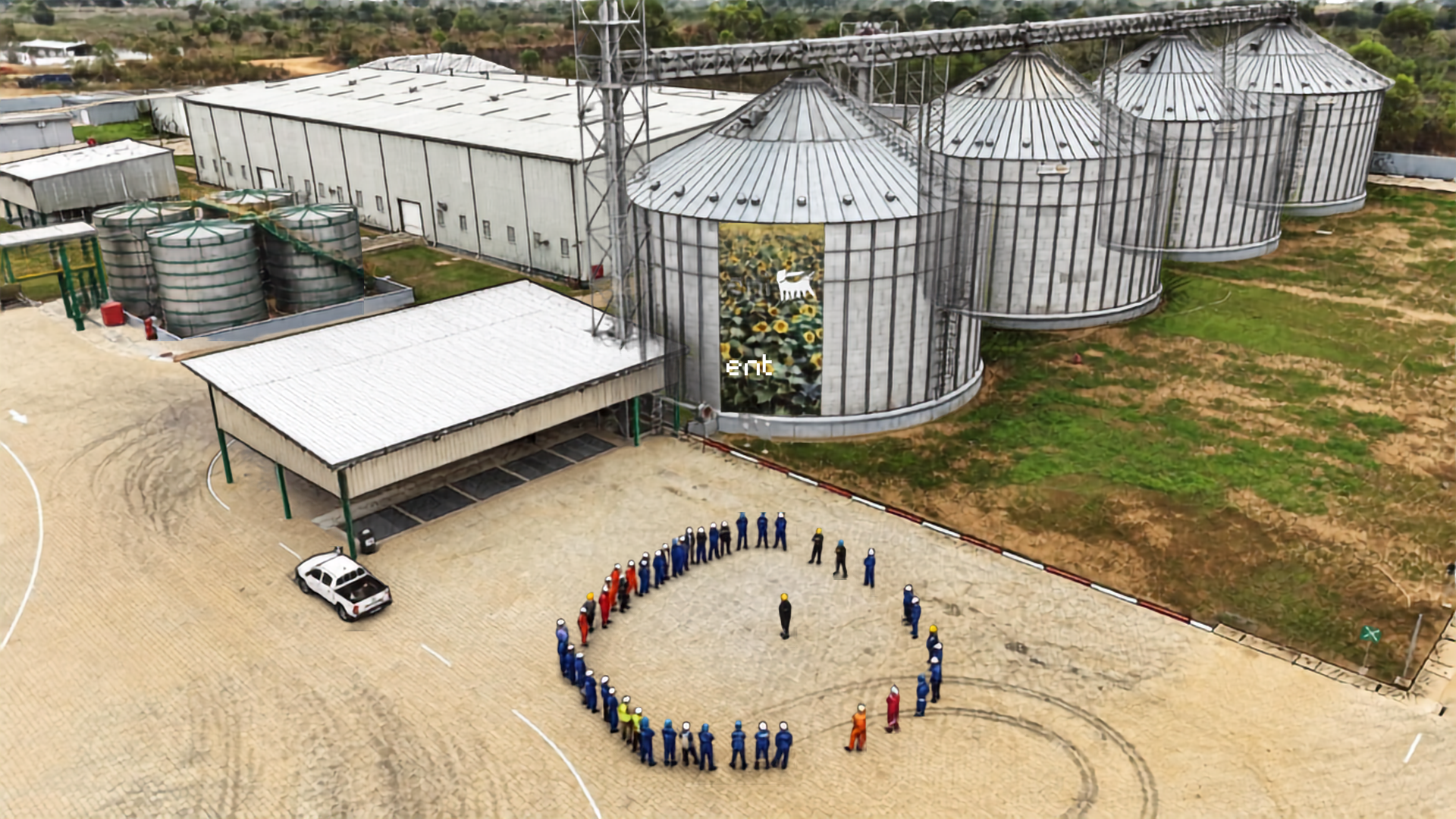
These figures were not presented simply as project achievements. They were used as a showcase of Zerock ability to manage a complex turnkey EPIC project, coordinate multiple disciplines and international logistics, and execute in a remote environment.
The question for Business Motion, as the communication firm on the project, was therefore not simply how to present the project. It was how to turn the project into communication that supports business development. And that required thinking about communication long before the project was completed.
The Objective
The communication was designed to support several business objectives: showing Zerock multidisciplinary capabilities, illustrating its experience operating in Sub-Saharan Africa, communicating its scale in managing demanding engineering, procurement and logistics requirements, and providing potential clients with a case study of how the company operates in complex environments.
The project could not simply be documented. It had to be communicated with a purpose.
We therefore began where every communication strategy should begin: identifying the audiences, the business objectives and the messages that needed to reach them.
The Roadmap
Once the objectives were established, the communication was planned alongside the evolution of the project. The intention was to build the story progressively, rather than arrive at the end of construction with a completed project and a limited amount of time to decide what should be said about it. Each milestone could add another layer to the narrative, while the project itself continued to reveal new aspects of Zerock capabilities.
This created a crescendo effect. We accompanied every milestone of the project and produced four videos along the way, each one adding a new layer to the story, before producing the final film.
As the project developed, we were not simply collecting footage for one future film. We were building a body of material that could eventually serve different communication instruments: a company profile, a calendar, an agenda, online communication, presentations, project material and, ultimately, a film.
The volume of material was significant. ENI was continuously filming the site for operational and archival purposes, which meant that a substantial amount of footage was being generated throughout the construction process. But having footage is not the same as having communication material. The footage had to be screened, relevant moments identified, selected and validated through the appropriate levels of the organisation before it could become part of a communication instrument.
There was also time to explore the story itself. Different concepts were developed as the project progressed. Some were approved and others were discarded. Interviews were filmed and later abandoned when they no longer served the narrative. The objective remained constant, but the way of expressing it continued to evolve.
That is one of the fundamental differences between planned and reactive communication. Planning does not mean deciding everything in advance. It gives you the time and structure to make better decisions as the project develops.
The Instrument
By the time we reached the stage of developing the main film, the objective and the story had already been shaped by the project itself. The challenge was therefore not simply to produce attractive images of a large construction site, but to find the right way to communicate the value that Zerock brought to AgriHub.
Even the production process had to adapt to the realities of the site. An external filming crew from Congo was brought to the project with professional equipment, but after an entire filming day, the material captured did not provide what was needed. A construction site cannot be treated like a film set. Operations cannot stop every time a camera needs a shot, and the site team cannot continually rearrange its work around a production schedule.
The communication process had to adapt to the operation, rather than asking the operation to adapt to the communication.
So the solution came from the site itself. A drone was sent to the operation engineer, together with clear guidelines on the type of footage required. The team coordinated remotely, while additional material was captured using a mobile phone. This approach allowed us to obtain the perspectives and moments needed without disrupting the work taking place on site. The people who knew the site best became part of the production.
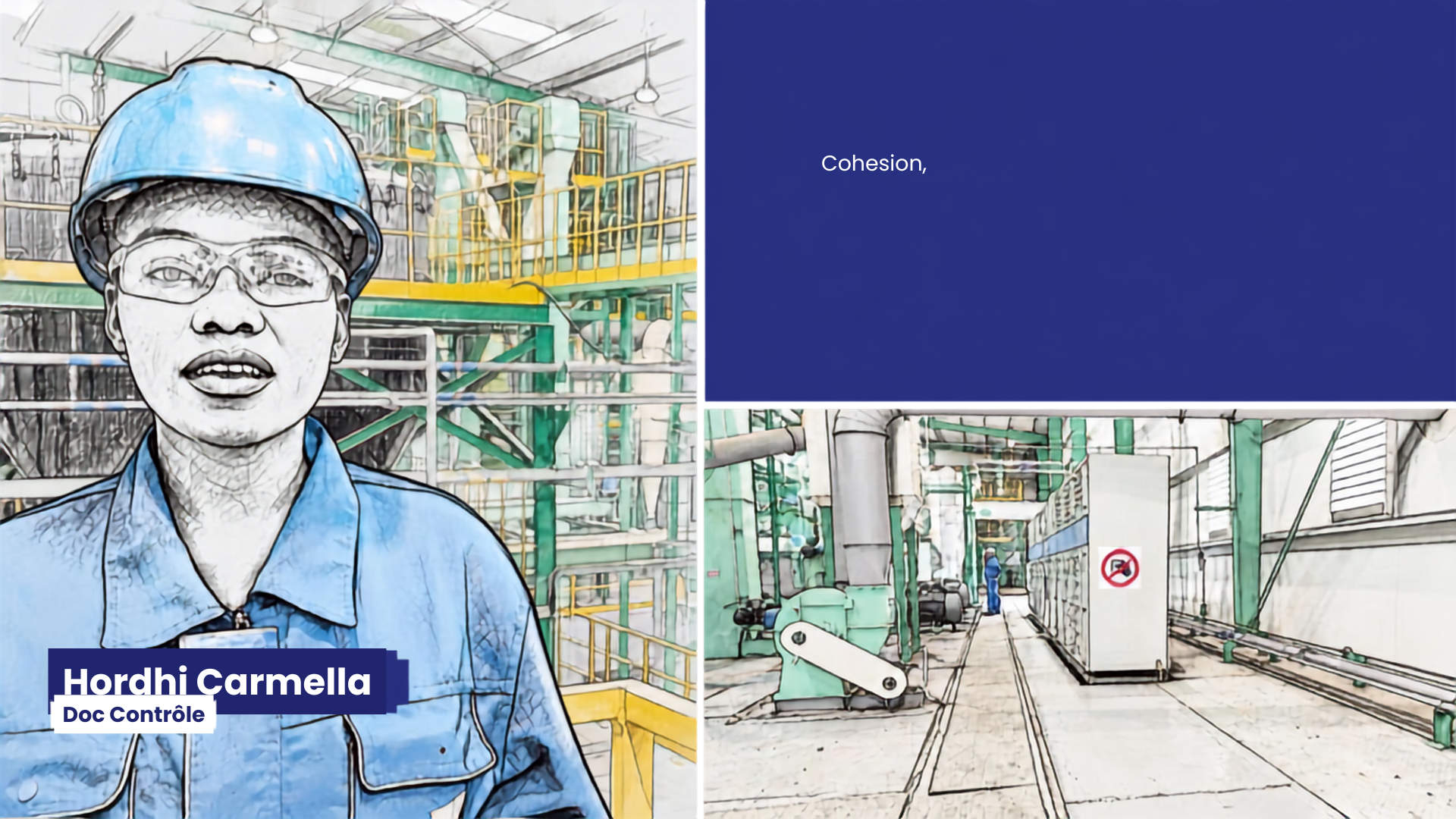
The final concept also emerged through this process. After exploring different approaches, we eventually decided to focus on two people working on the site: the HSE site manager, whose role was central to a project delivered with zero accidents and zero incidents, and a Congolese member of the site administration team. Their presence brought another dimension to the story, while the project itself remained the evidence of Zerock capabilities.
None of this happened in isolation at the end of the project. The final instrument was the result of months of observing, selecting, testing, changing direction and adapting to what the project was revealing.
The Conclusion
AgriHub demonstrates what becomes possible when corporate communication is treated as part of the project rather than something activated when the project is finished. Planning did not determine the final instrument from the outset. It created the conditions to make better decisions about what to communicate, how to communicate it and which instruments could serve the business.
The result was therefore more than a film about a completed facility. It became a business development asset for Zerock. The final film may be what people see, but it is only the visible result of a much longer process.
The masterpiece was not created in the editing room. It was built throughout the project.