Most organizations use video to promote. The ones that get results use it to communicate. Here is the structural difference.
The Shift that Most Organizations Missed
For years, video was treated as a promotional asset, something you produced to announce a product, fill a homepage, or run as an ad. That framing still dominates how most organizations approach it. It is also why most of what they produce gets watched once and forgotten.
The organizations that get consistent results from video have made a different choice. They treat it as a communication instrument: a vehicle for a message, designed around an objective, built for a specific audience. The difference between those two approaches is not aesthetic. It is structural.
Video built around a message works. Video built around a product competes.
What a Communication Instrument Actually Does
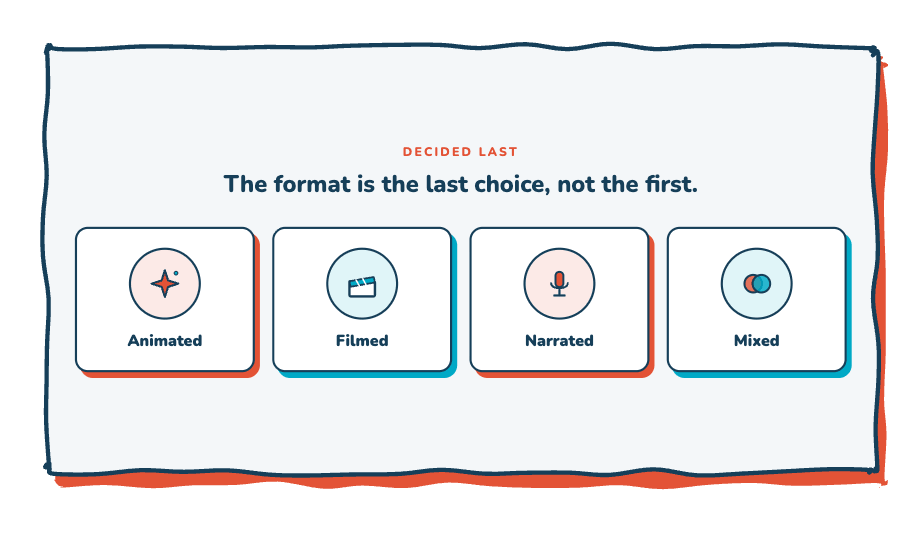
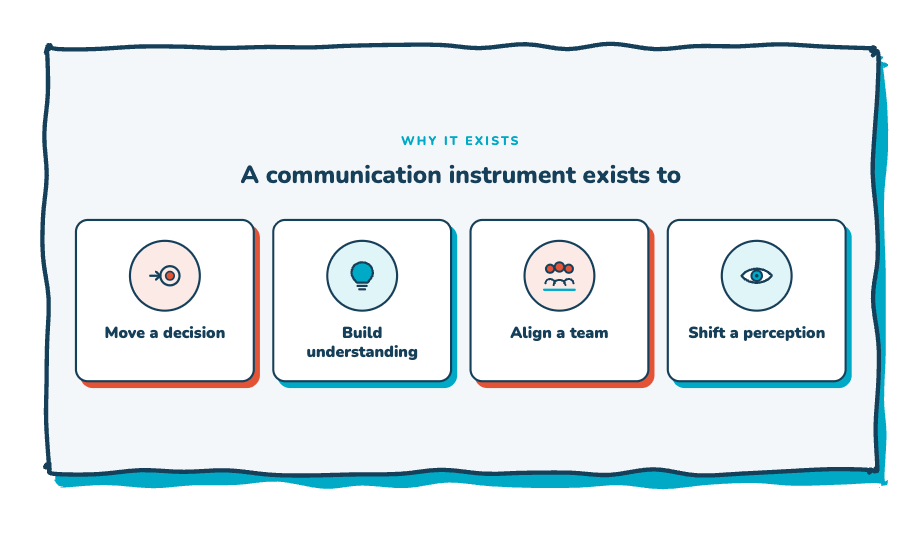
A communication instrument is not a format. It is a function. It exists to move a decision, build understanding, align a team, or shift a perception. The format, whether animated, filmed, narrated, mixed, is the last choice, not the first.
This is why, at Business Motion, the scripting and concept phase takes more time than the production phase. Before any visual decision is made, we need to know: what does this instrument need to accomplish? Who is watching it, and what should they understand or do afterward? What is the single message this instrument carries?
When those questions are answered, the instrument builds itself. When they are skipped, the result is polished but inert.
The message determines the instrument. The instrument does not determine the message.
Why Executives Moved First
Business decision makers were among the earliest and most consistent consumers of professional video. The reason is not that they like video more. It is that they have less time and need more information density per minute. A well-built communication instrument compresses complex information into a format that can be consumed in a meeting room, on a screen, before a board presentation.
This is also why executive communication demands a different standard. The instrument needs to be concise without being superficial, clear without being reductive, and authoritative without being distant. That is a communication design problem, not a production problem.
What this Means for Your Organization
If you are approaching video as a content format, you are solving the wrong problem. The question is not "how many videos should we produce?" The question is: what communication challenges do we have, and which of them require an instrument of this kind?
That reframing changes everything: the budget conversation, the briefing process, the measurement of success, and the relationship with whoever builds the instrument for you.
A communication firm approaches it that way from the first conversation. A production company approaches it from the format.