


A viewer rarely notices good background music. They always notice the wrong one. How to choose music that supports the message without competing with it.
Music Sets the Mood Before a Word is Spoken
Before a script has said anything, music has already told the viewer how to feel: upbeat, serious, warm, urgent. Choosing a track means asking what the audience should feel first, not what sounds good in isolation. A track that fits an executive audience will rarely fit a younger or more casual one, and the reverse is just as true.
Whatever mood the music sets, it sets it before the first sentence is spoken.
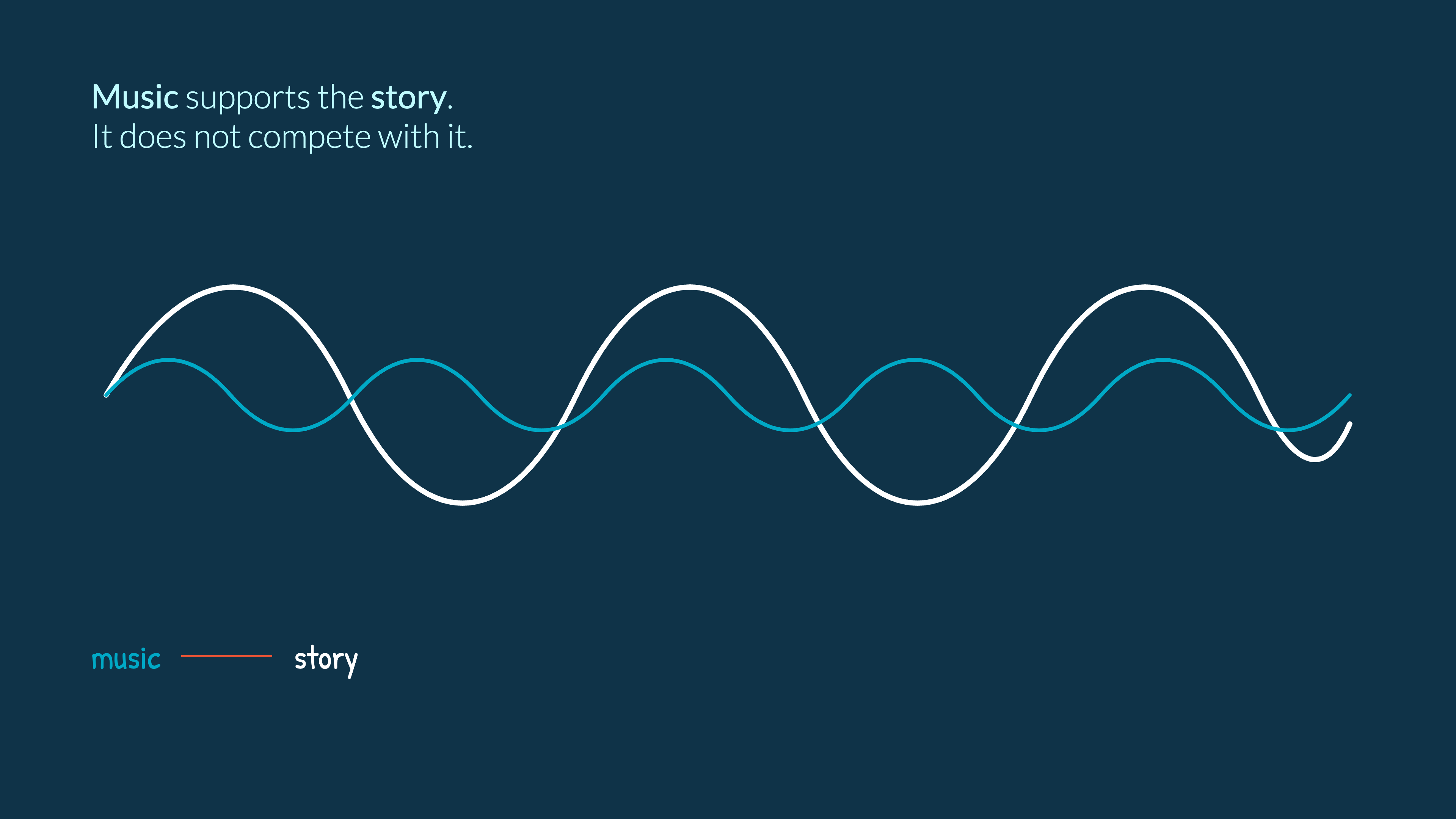
It Supports the Story. It Does Not Compete With It.
Music that sits under narration should stay under it, quiet enough that a voice, a line of dialogue, or an on-screen message never has to compete for attention. The moment music becomes noticeable for the wrong reason, it has stopped doing its job.
Choose It Early, Not Last
Music picked after a video is finished, purely to fill the silence, rarely fits as well as music chosen while the edit is still being shaped. Cutting or animating to a track's pacing produces a result that feels intentional rather than assembled.
How the Choice Used to Get Made, and How It Gets Made Now
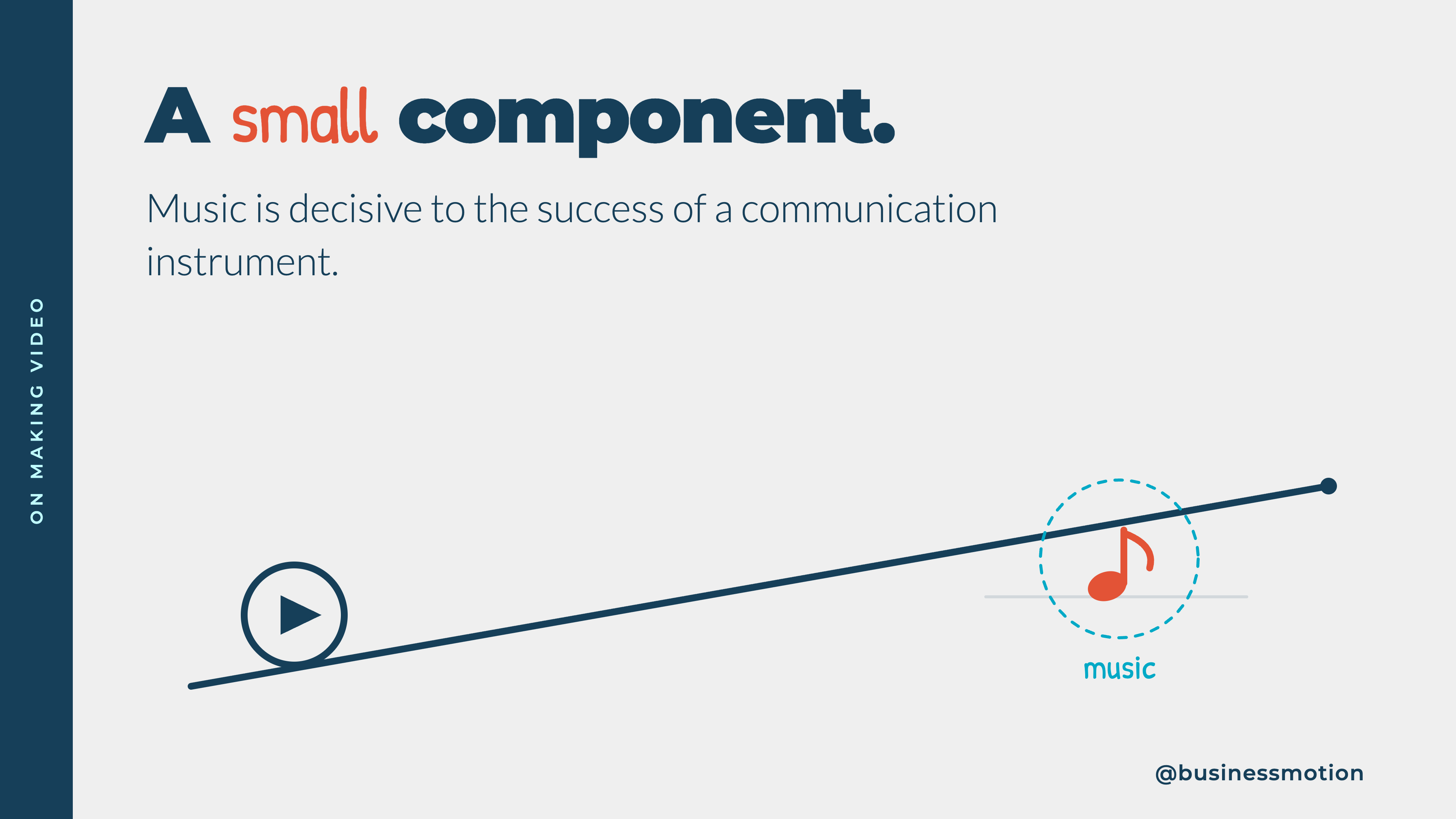
Years ago, choosing music for a video meant flipping through stock CDs or a handful of library catalogues, usually after the edit was already locked, and settling for whatever came close enough. Today, searchable libraries tagged by mood and tempo, and increasingly AI-assisted composition, mean a track can be found, or generated, in minutes rather than days, and matched to a script before a single frame is shot. What has not changed is the standard: faster access has raised what counts as an acceptable choice, not lowered it. Music is still, as it always was, one of the small decisions that decides whether the finished instrument succeeds.
Access to music got easier. The standard for choosing it well did not.
And a Practical Rule: License It Properly
Any music used commercially needs the rights to be there, whether licensed from a library or produced specifically for the project. It is a small line item next to everything else in a video, and one worth never skipping.
Good background music rarely gets noticed, and that is exactly the sign it was chosen well. Access to it has only gotten easier, but it remains one of the more decisive small components behind whether a communication instrument succeeds. Reach out if you are building a video and want a second opinion on the track.